The Care and Keeping of Upholstery: A Practical Guide
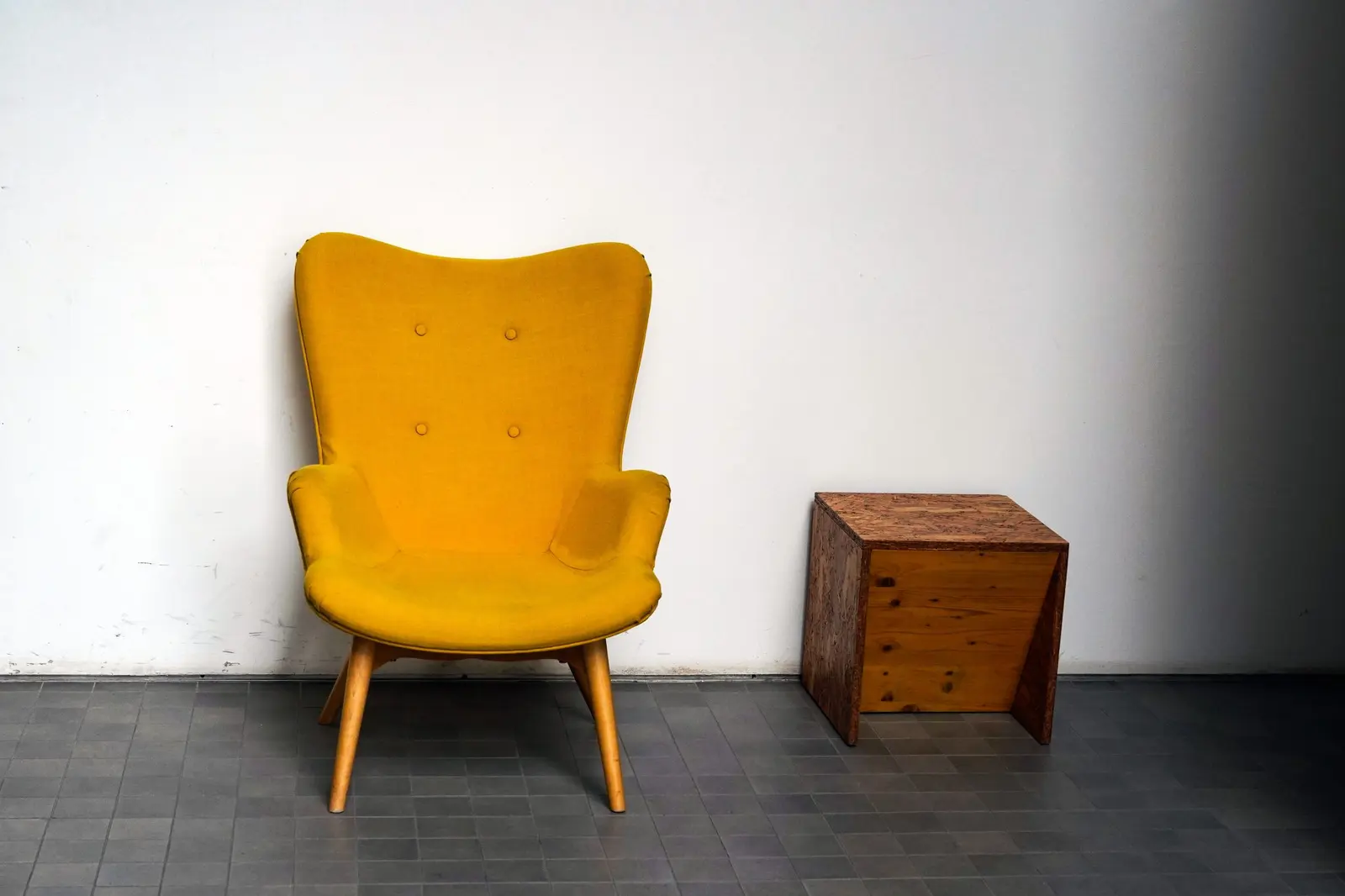
A well-made chair should outlive its first owner's address, possibly the owner's taste, and certainly its fabric. The frame is built for decades; the textile is built to be cared for and, eventually, renewed. Most upholstery "damage" we are asked to repair is really maintenance that was skipped for five years.
Here is the regime we recommend for every upholstered piece we deliver.
The weekly minute
Dust is an abrasive. Ground into a weave by daily use, it cuts fibres the way fine sandpaper cuts wood. The single highest-value habit is also the cheapest one:
- Vacuum seats, backs and arms with the soft brush attachment, on low suction.
- Once a month, lift the cushions and do the frame and crevices.
- Rotate and flip loose cushions every time you vacuum — wear shared is wear halved.
Light is the slow spill
Direct sun fades dyed textiles unevenly and embrittles the fibre. A mustard yellow like the chair above will mellow beautifully over years of indirect light — and stripe in one season on a sunny window's axis. If a piece must live by glass, turn it a few degrees monthly and consider a sheer.
When something spills
Speed beats product. Almost every permanent stain is a fresh stain that was rubbed.
- Blot immediately with a dry white cloth. Press, lift, move to a clean section. Never rub.
- Work from the edge inward so the mark cannot spread.
- If needed, use water sparingly — damp, not wet — or follow the fabric's cleaning code (W, S, WS or X on the care label).
- Dry away from heat. A hairdryer sets some stains permanently.
The cleaning code is not a suggestion. A solvent-only (S) fabric treated with water can water-mark worse than the original spill.
Once a year, hand it over
An annual professional clean removes the soiling that domestic care cannot reach and re-lofts flattened pile. For contract pieces in daily public use, make it twice a year and it will read as new for a decade.
Renewal is the feature, not the failure
When a cover finally tires, that is the design working as intended: our pieces are built so the textile can retire while the frame carries on. Re-upholstery in a new fabric is how a ten-year-old chair becomes the newest piece in the room.