In Proportion: Scaling Furniture to the Room
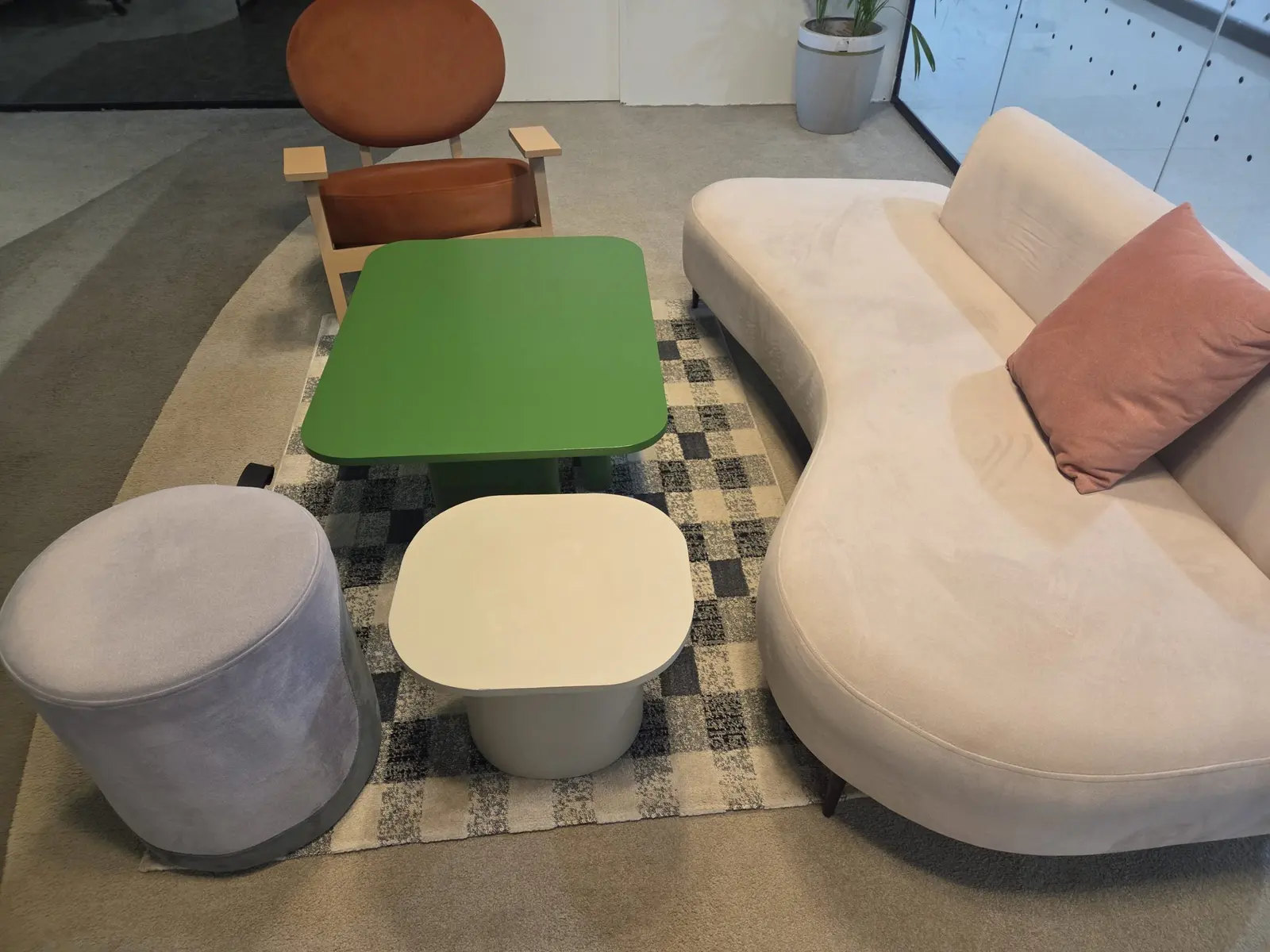
Ask someone why a room feels wrong and they will usually answer in the vocabulary of style — wrong colour, wrong era, wrong mood. Look closer and the real culprit is almost always scale: a sofa an inch too tall for the window line, a coffee table marooned too far from the seats, six small pieces where two generous ones should stand.
Proportion is learnable. Here is the method we use when we plan a seating group.
Clearances first, furniture second
Before any piece is chosen, the room dictates numbers:
- Main walkways: 80 cm minimum, 100 cm where two people pass.
- Sofa to coffee table: 40–45 cm — close enough to set down a glass without standing.
- Seat to seat in conversation: under 2.5 m between facing pieces, or voices rise.
- In front of storage: a full door's swing plus a standing person.
Draw these on the floor plan as forbidden zones. The furniture lives in what remains — and what remains is honest about what the room can hold.
The one-big-piece rule
Every seating group needs exactly one anchor: the largest piece the clearances allow, usually the sofa. The seating group in the photograph works on this rule — one generous curved sofa carries the composition, and everything else (chair, pouf, tables) is deliberately subordinate.
The common failure is democratic furniture: four medium pieces of equal visual weight, voting against each other. A room with no anchor feels busy at any size.
Heights make the calm
Varied footprints are good; varied heights are noise. Keep seat backs within a hand's span of each other, and keep tables at or just below the seat height beside them. The eye reads the room as a single horizon and relaxes. Save the one tall exception for where you want attention — a cabinet, a plant, a lamp.
Negative space is furniture
The most expensive thing in the photograph above is the empty floor around the group. Resist filling it. A seating island floating in clear space reads as intentional and premium; the same pieces pushed to the walls read as a waiting room.
When in doubt: fewer pieces, one size larger.
It is the single most reliable upgrade in interior composition — and it usually costs less than the extra pieces it replaces.